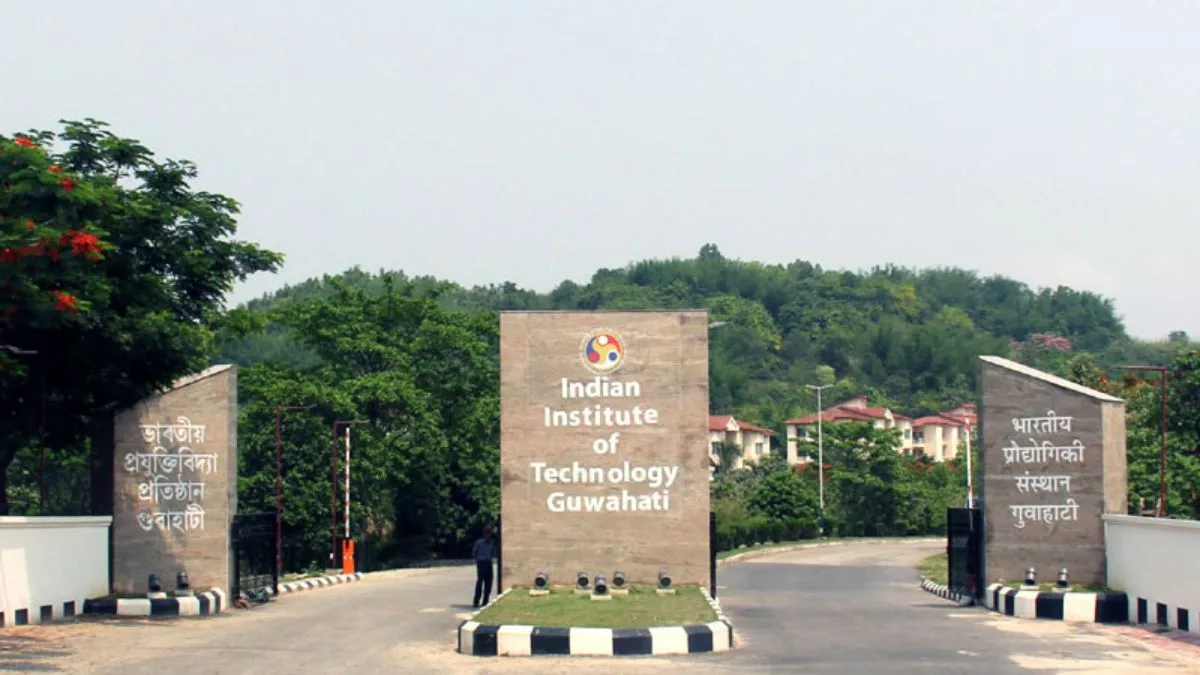
The Northeast Frontier Railway (NFR) has partnered with the Indian Institute of Technology (IIT) Guwahati to introduce biodegradable and compostable materials in place of traditional plastics.
The initiative will be formally launched on August 15, India’s 79th Independence Day, with the rollout of eco-friendly bed-roll bags across 25 trains originating from Assam, West Bengal, Bihar, Tripura, and Arunachal Pradesh. Nearly 40,000 such bags will be distributed in the pilot phase.
Advertisement
The collaboration is led by NFR’s General Manager, Chetan Kumar Shrivastava, and Professor Vimal Katiyar of IIT Guwahati, whose team has developed ISO 17088-compliant bio-plastics at its in-house research and development facility.
Unlike conventional plastic, these green alternatives degrade quickly in compost, offering a durable yet environment-friendly solution for railway operations.
The move comes at a time when India has been steadily phasing out single-use plastics under the Plastic Waste Management (Amendment) Rules, 2021. With the railway network catering to over 8 billion passengers annually, experts say such efforts by Indian Railways can have a transformative impact on reducing plastic waste nationwide.
NFR has long positioned itself as a pioneer in eco-friendly practices. Over the past decade, the zone has accelerated electrification of railway lines, installed solar panels, introduced rainwater harvesting systems, and implemented bio-toilets and automatic coach-washing plants.
It has also deployed AI-based intrusion detection systems to prevent elephant casualties on tracks, carried out afforestation drives, and converted wastelands into green belts. A notable achievement has been the inoculum generation plant at Kamakhya, which recycles biodegradable waste and reprocesses used bed-roll bags into new ones, further curbing landfill pressure.
Speaking on the initiative, officials emphasized that the collaboration with IIT Guwahati is not just symbolic but a scalable model for greener railway operations across India. By aligning passenger convenience with ecological responsibility, NFR aims to reduce its carbon footprint, conserve resources, and lead the transition to a cleaner transport ecosystem.